
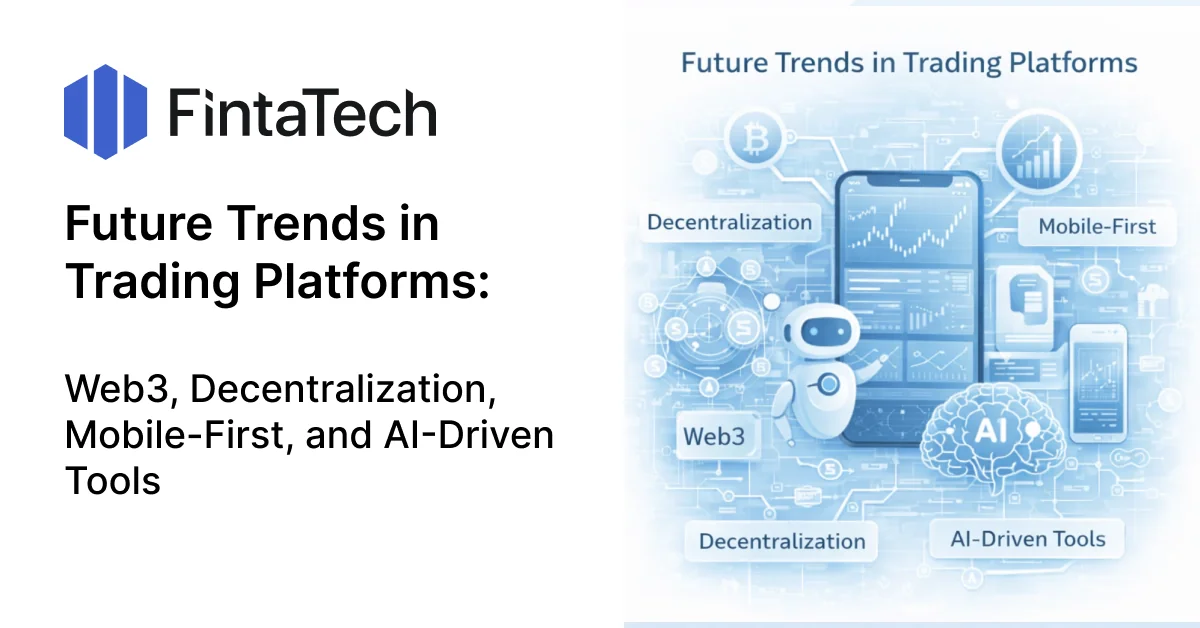
The trading industry has undergone a dramatic transformation over the past two decades. What once required physical broker calls, desktop terminals, and delayed market data is now executed in milliseconds through intuitive digital platforms accessible from almost anywhere in the world. Yet the evolution is far from complete. Emerging technologies and shifting user expectations are reshaping what traders consider “standard,” pushing platforms toward new paradigms of speed, transparency, personalization, and autonomy.
Today, trading platforms are no longer just tools for order execution. They are becoming ecosystems that integrate analytics, automation, social features, decentralized finance infrastructure, and intelligent assistants. Companies that build or maintain trading software must look beyond incremental improvements and understand the deeper technological and behavioral trends influencing the next generation of platforms. Web3 architecture, decentralization, mobile-first design philosophy, and AI-driven tools are not isolated developments — they form a connected landscape that will define competitive advantage in the coming years.
The Current State of Trading Platforms
Before exploring future trends, it is important to understand where the industry stands today. Most contemporary trading platforms fall into three broad categories:
- Desktop-based terminals used by professional traders and institutions
- Web-based platforms accessed through browsers without installation
- Mobile applications optimized for smartphones and tablets
These platforms typically provide charting tools, technical indicators, order management systems, news feeds, and risk control features. However, despite their sophistication, they often share similar structural limitations.
Many existing platforms are still heavily centralized, rely on third-party liquidity providers, and offer limited customization for individual trading styles. Performance bottlenecks, fragmented user experiences across devices, and opaque fee structures continue to frustrate both retail and institutional traders. Additionally, modern users expect intuitive design, real-time insights, and automated assistance — expectations that legacy systems were not built to satisfy.
The next wave of innovation is therefore less about adding features and more about redefining architecture, user interaction, and intelligence layers within the platform.
Web3 and Blockchain Integration
Web3 represents a shift from platform-owned infrastructure toward user-owned ecosystems powered by blockchain technology. In the context of trading platforms, Web3 does not simply mean cryptocurrency support. It signals a deeper transformation in how data, assets, and transactions are stored, validated, and exchanged.
Core Web3 Implications for Trading
Web3 integration introduces several structural changes:
- Smart Contracts enabling automated trade execution and settlement without intermediaries
- Tokenization of Assets allowing stocks, commodities, or real estate shares to exist as digital tokens
- Transparent Ledgers ensuring transaction histories cannot be altered or hidden
- User Custody of Assets reducing dependency on centralized custodians
These mechanisms can significantly reduce operational friction, enhance transparency, and build trust through verifiable data. For platform developers, Web3 opens opportunities to design hybrid systems where centralized performance meets decentralized security.
Practical Benefits
In real-world applications, blockchain-enabled trading platforms may offer:
- Faster cross-border settlements
- Lower transaction fees in certain scenarios
- Reduced fraud risk
- Greater asset accessibility for global users
Challenges and Barriers
Despite its promise, Web3 adoption is not without complications. High network fees, regulatory uncertainty, and steep learning curves for non-technical users remain significant obstacles. User experience design is especially critical, as wallet management, private keys, and decentralized identity systems can be confusing for mainstream audiences.
Decentralization and the Rise of DeFi
While Web3 provides the technological backbone, decentralization represents the philosophical and operational shift away from single-authority control. In trading, this is most visible through the rise of decentralized finance (DeFi) platforms.
Decentralized trading systems operate through peer-to-peer protocols rather than centralized brokers. Instead of placing orders through a single entity, traders interact directly with liquidity pools or automated market makers.
Key Components of Decentralized Trading
- Decentralized Order Books that exist on distributed networks
- Liquidity Pools replacing traditional market makers
- Automated Market Makers (AMMs) determining prices algorithmically
- Non-Custodial Trading where users maintain control over their funds
Impact on the Role of Brokers
The shift toward decentralization reduces reliance on traditional intermediaries. Brokers may transition from transaction facilitators to service providers offering analytics, risk management, compliance tools, or educational resources. Platforms that successfully integrate decentralized components without sacrificing usability will likely gain strong market positioning.
Security Considerations
Decentralization increases autonomy but also introduces new risk dimensions. Smart contract vulnerabilities, liquidity manipulation, and impermanent loss are real concerns. Therefore, auditing mechanisms, insurance layers, and transparent governance systems become essential design elements in next-generation platforms.
Mobile-First Trading Experiences
The mobile revolution has fundamentally altered how users interact with digital services, and trading is no exception. Mobile-first design is no longer a trend; it is rapidly becoming a requirement. Modern traders expect full platform functionality on smartphones, not limited companion apps.
Mobile trading is driven by behavioral changes rather than technology alone. Users want instant access to markets during commutes, travel, or short decision windows. The concept of “micro-moment trading” — executing trades within seconds of opportunity — is increasingly common.
Characteristics of Mobile-First Platforms
- Gesture-based navigation and intuitive UI patterns
- Real-time push notifications for price alerts and signals
- Biometric authentication for secure access
- Optimized data visualization for small screens
- Instant funding and withdrawals
Technological Enablers
Developers are leveraging progressive web apps (PWAs), cloud synchronization, and offline capabilities to ensure uninterrupted user experience. Performance optimization is critical, as latency or crashes can directly impact financial decisions.
Mobile-first does not mean mobile-only. Instead, it implies that mobile usability drives the design philosophy across all devices. Platforms that treat mobile as an afterthought risk losing engagement and retention.
AI-Driven Tools and Intelligent Automation
Artificial intelligence is arguably the most transformative force shaping the future of trading platforms. Unlike previous technological waves, AI does not merely enhance performance; it introduces entirely new categories of functionality.
AI-driven tools extend beyond algorithmic trading. They influence personalization, decision support, risk analysis, and even emotional bias mitigation.
Areas of AI Application
- Predictive Analytics forecasting price movements based on historical patterns
- Sentiment Analysis scanning news, social media, and financial reports
- Automated Trading Bots executing predefined strategies
- Personalized Dashboards adapting layout and indicators to user behavior
- Anomaly Detection identifying unusual market conditions
Underlying Technologies
These tools are powered by machine learning, natural language processing, and reinforcement learning models. As data availability increases, AI systems become more accurate and adaptive.
Ethical and Regulatory Considerations
AI introduces transparency and accountability questions. Traders may not fully understand how models generate signals, raising concerns about over-reliance or systemic risk. Regulatory bodies are beginning to examine algorithmic accountability, making explainable AI an important future requirement.
Convergence of Trends: A Unified Ecosystem
The most impactful transformation will not come from any single trend, but from their convergence. The trading platform of the future is likely to combine decentralized infrastructure, mobile accessibility, and AI intelligence into a unified ecosystem.
Imagine a scenario where a trader receives an AI-generated market signal on a mobile device, executes the trade through a decentralized protocol, and verifies transaction authenticity through blockchain transparency — all within seconds. This integration enhances speed, trust, and personalization simultaneously.
Such ecosystems may also incorporate social trading, community governance, and cross-platform synchronization, creating multi-layered environments rather than standalone tools.
Risks, Challenges, and Adoption Barriers
Despite technological momentum, several challenges may slow adoption:
- Regulatory Complexity across jurisdictions
- Scalability and Network Latency in decentralized systems
- User Education Gaps in Web3 and AI technologies
- Security Threats including phishing and smart contract exploits
- Design Complexity balancing power and simplicity
Companies entering or expanding within this space must invest not only in technology but also in compliance, user onboarding, and long-term support infrastructure.
How These Trends Will Shape Traders and Markets
As platforms evolve, trader behavior will evolve with them. Manual chart analysis may give way to AI-assisted decision making. Retail participation is expected to grow as access barriers decline. New professional roles will emerge, including AI trading strategists, blockchain auditors, and data-driven risk analysts.
Markets themselves may become more dynamic and globally interconnected. The distinction between traditional finance and decentralized finance is likely to blur, resulting in hybrid ecosystems where institutional and retail participation coexist more fluidly.
Conclusion
The future of trading platforms is defined by intelligence, accessibility, and autonomy. Web3 introduces transparency and ownership, decentralization reduces dependency on intermediaries, mobile-first design ensures constant accessibility, and AI-driven tools empower smarter decision making. These elements are not competing directions — they are complementary forces shaping a new generation of financial technology.
For platform developers and fintech companies, the opportunity lies in strategic integration rather than isolated implementation. Success will depend on balancing innovation with usability, security with flexibility, and automation with human control. As these trends mature, trading platforms will transform from execution tools into adaptive financial ecosystems capable of serving increasingly sophisticated and diverse user needs.
Ready to build the next generation of trading solutions?
If you are planning to launch a new trading platform or upgrade an existing one, aligning your product strategy with Web3, AI, and mobile-first principles is no longer optional — it’s a competitive necessity.
Explore how a purpose-built platform architecture can accelerate your time-to-market and scalability with Fintatech Trading Platform Designer.
The earlier innovation becomes part of your roadmap, the stronger your long-term market position will be.

Twitter
Linkedin
Facebook