
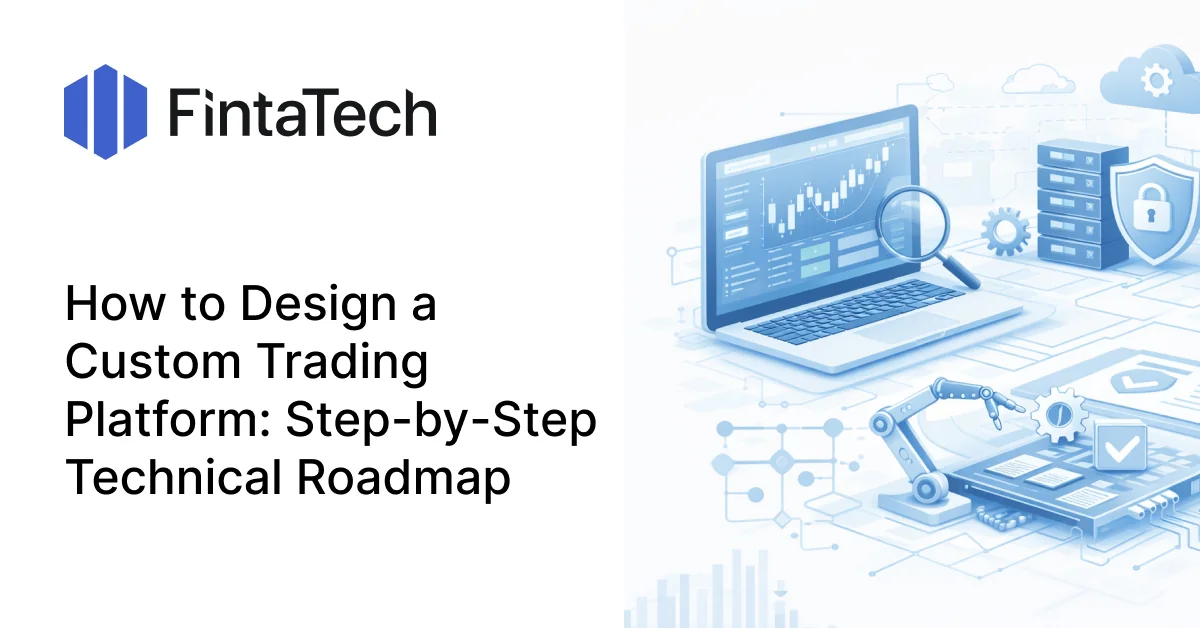
Building a custom trading platform is not just a software project, it’s a long-term business decision that directly affects performance, scalability, compliance, and user trust. Unlike simple web applications, trading platforms operate in real time, process sensitive financial data, and must remain stable even during extreme market volatility.
In this article, we’ll walk through a practical, step-by-step technical roadmap for designing a custom trading platform, from early product decisions to architecture, infrastructure, security, and post-launch optimization.
Product Discovery: Defining Business Objectives and Platform Scope
he most common mistake in trading platform development is jumping straight into technology choices. Before architecture diagrams or tech stacks come into play, you need a clear understanding of what you’re actually building and why.
At this stage, the goal is to define how the platform will work from a business and user perspective. Will it support stocks, crypto, forex, or multiple asset classes? Is it aimed at retail traders, professional users, or institutions? Will users trade directly on the platform, or will orders be routed to external brokers or exchanges?
These answers influence everything that follows — from compliance requirements to system load and latency expectations. A trading platform built for retail crypto users will look very different from one designed for institutional equity trading. Clear requirements at this stage reduce technical debt, rework, and costly architectural changes later in development.
System Architecture Design for High-Performance Trading Platforms
Once the product vision is clear, the next step is choosing an architecture that can support real-time trading at scale.
Most modern custom trading platforms rely on microservices architecture. This approach allows different parts of the system, such as market data, order management, user accounts, and reporting — to scale independently and be deployed without affecting the entire platform.
Event-driven architecture is also a common choice. Trading platforms constantly react to events: price updates, order submissions, executions, margin changes, and alerts. An event-based approach ensures low latency and smooth data flow across the system.
At the core of the architecture, you’ll typically find services responsible for order processing, market data handling, risk checks, authentication, and analytics. These components must be designed for high availability and fault tolerance, as even short outages can result in financial losses and reputational damage.
Trading Engine & Order Management System Architecture
The trading engine is the heart of the platform. It’s responsible for validating orders, applying risk rules, matching or routing trades, and confirming execution results.
In custom trading platforms, the order management system must handle a wide range of order types while remaining extremely fast and reliable. Even small inefficiencies in this layer can lead to delays, rejected orders, or inconsistent trade states.
Performance, consistency, and accuracy matter more here than anywhere else. This is why many teams invest heavily in optimizing the trading engine, sometimes using lower-level languages or specialized frameworks to achieve predictable latency under heavy load.
Market Data Infrastructure and Real-Time Streaming Pipelines
Market data is what makes a trading platform feel alive. Prices, charts, order books, and indicators must update in real time, often multiple times per second.
Custom platforms usually integrate multiple data sources: exchanges, liquidity providers, aggregators, or broker APIs. Each source may use different formats, update frequencies, and protocols, which means data normalization becomes a critical task.
A well-designed market data pipeline ensures consistent pricing, minimizes delays, and gracefully handles data gaps or outages. Technologies like WebSockets, streaming APIs, and in-memory caching are commonly used to keep data flowing smoothly to both backend services and frontend interfaces.
Trading Platform UI/UX Engineering and Frontend Performance Optimization
A trading platform’s interface is more than just a UI — it’s a decision-making tool. Traders rely on clear visuals, instant feedback, and predictable behavior, especially during volatile market conditions.
Modern platforms typically use frameworks like React or Vue.js to build responsive, real-time dashboards. Live charts, order panels, portfolio views, and notifications must update instantly without overwhelming the browser or mobile device.
Performance optimization on the frontend is critical. Even if the backend is fast, a slow or cluttered interface can lead to missed trades and frustrated users.
Security Architecture, KYC/AML, and Regulatory Compliance Framework
Security and regulatory compliance should be built into the platform from the very beginning. Retrofitting security after launch is risky, expensive, and often ineffective.
Custom trading platforms usually implement strong authentication, encrypted data storage, secure API access, and strict role-based permissions. At the same time, compliance requirements such as KYC, AML, transaction monitoring, and audit logging must be handled consistently across the system.
Depending on the target markets, additional standards like GDPR, SOC 2, or regional financial regulations may apply. Addressing these early helps avoid legal issues and builds trust with both users and partners.
Cloud Infrastructure, Scalability Strategy, and High-Availability Setup
Trading activity is rarely consistent. Traffic spikes during market openings, breaking news, or sudden price movements. Your infrastructure must be ready for these moments.
Most modern platforms are deployed in the cloud, using containerization and orchestration tools to scale automatically when load increases. High availability setups, multi-region deployments, and reliable backup strategies are essential for minimizing downtime. Scalability is not just about handling more users, it’s about maintaining performance when it matters most.
Testing Strategy for High-Load and Low-Latency Trading Systems
Testing a trading platform goes far beyond standard functional checks. The system must be tested under extreme conditions that simulate real-world trading scenarios.
This includes load testing, stress testing, failure recovery testing, and security audits. Many teams also create sandbox or paper trading environments to validate behavior without financial risk. The goal is to ensure that the platform behaves predictably, even when markets don’t.
Final Thoughts
Designing a custom trading platform requires a deep understanding of fintech systems, real-time architecture, security, and regulatory constraints. With a clear technical roadmap and the right development approach, it’s possible to build a platform that is fast, secure, scalable, and ready for future growth.
If you’re planning to develop a custom trading platform, working with an experienced fintech development partner can significantly reduce risks and accelerate time to market.

Twitter
Linkedin
Facebook