
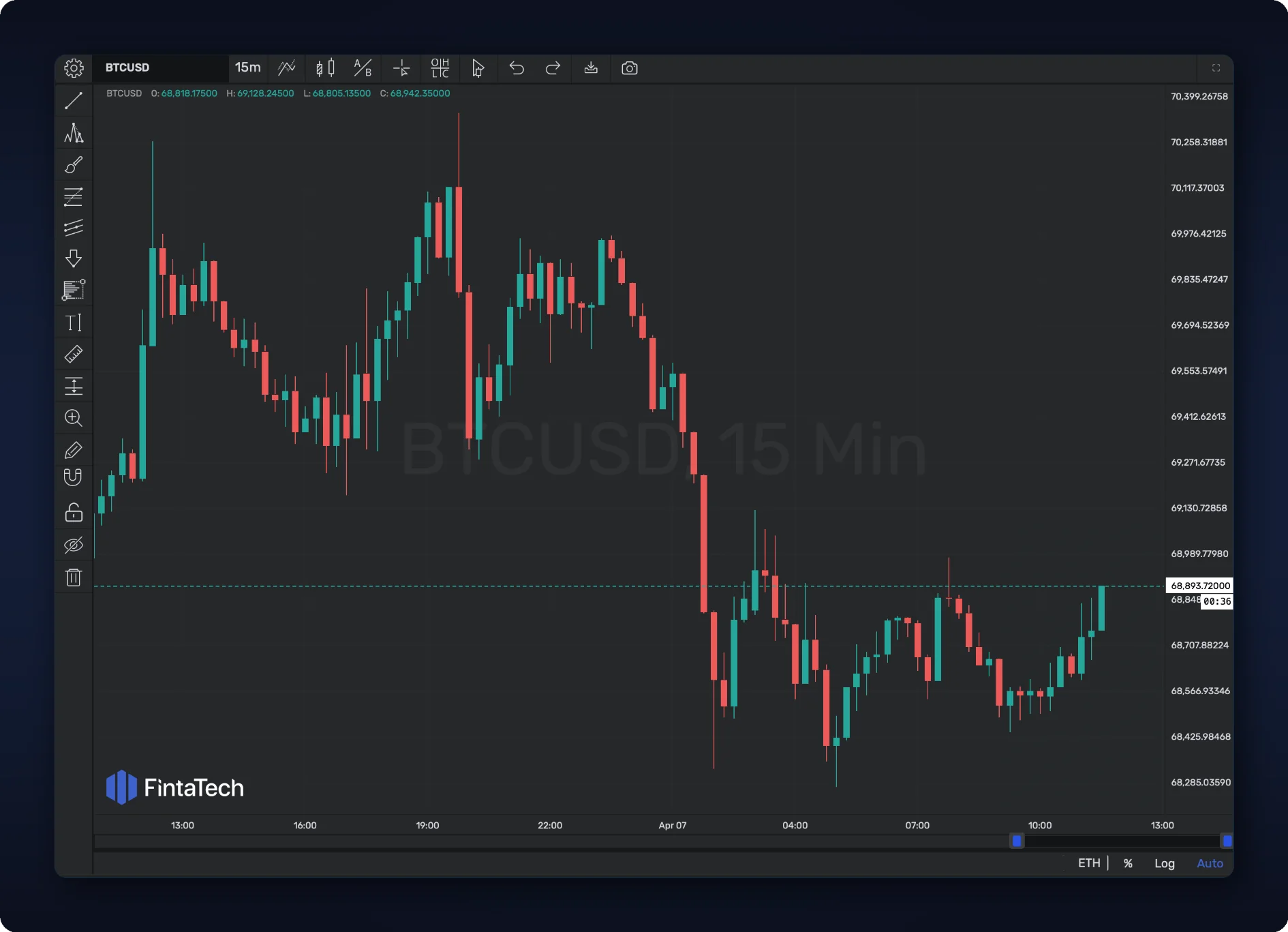
The landscape of retail trading has fundamentally transformed over the past decade. Today’s traders are no longer confined to the traditional operating hours of local stock exchanges. Instead, they demand uninterrupted access to a global, continuous marketplace that encompasses Forex, cryptocurrencies, and Contracts for Difference (CFDs). For businesses researching how to build a trading platform, this paradigm shift presents a significant technical challenge that cannot be ignored.
The software tools built for the old world of traditional equities frequently crumble under the extreme demands of modern digital assets. Choosing the right structural SaaS components is the most critical decision a business will make when designing its infrastructure. The charting engine is not just an optional visual feature. It is the absolute core of the user trading experience and the primary utility retail investors rely on to make financial decisions.
Implementing a generic, one-size-fits-all chart for these highly specialized markets is a recipe for user frustration, negative reviews, and ultimately platform failure. At Fintatech, we operate strictly as a B2B SaaS product company. We provide powerful, ready-to-deploy software components rather than custom agency development services. In this article, we will explore why modern markets require a specialist toolset and how to select the right trading platform software that genuinely meets the needs of today’s sophisticated traders.
The Unique Demands of Modern Markets
When you integrate modern forex trading software, you are dealing with an entirely different technological beast compared to traditional stock market applications. The underlying mechanics of these digital markets impose severe stress on front-end visualization tools. Understanding these rigorous demands is the first step in successful platform architecture.
The Continuous High-Frequency Data Stream
Unlike stock markets that have clear opening and closing bells, Forex and cryptocurrency markets never sleep. They operate twenty-four hours a day and seven days a week. Furthermore, they generate a relentless and high-frequency stream of tick data. A generic charting library is often built to handle simple polling mechanisms where data is updated every few seconds or minutes.
In stark contrast, modern trading platforms must process continuous WebSocket streams pushing multiple price updates per second. A charting engine must be built on a high-performance architecture to process this constant flow without lag, visual stuttering, or memory leaks that crash the user browser after a few hours of continuous use. When a trader is executing high-frequency strategies, even a delay of a few milliseconds in visual price updates can result in severe slippage and lost capital.
Managing Extreme Volatility and Rapid Price Action
Cryptocurrency and CFD markets are notorious for their rapid and violent price swings. A single news event or economic data release can cause a massive influx of trading volume and extreme price wicks. Generic charting engines that rely on outdated rendering technologies are rarely equipped for this. Libraries that depend heavily on Document Object Model manipulation create a new element in the browser for every single data point. During periods of high volatility, this approach easily overwhelms the browser and causes the entire application to freeze.
When the chart freezes right at the moment a trader needs to execute a critical stop-loss order, user trust is instantly destroyed. Professional-grade software must be able to visualize these volatile movements flawlessly in real time. The rendering engine must be capable of redrawing thousands of data points instantly using advanced technologies like HTML5 Canvas or WebGL to ensure the trader always sees the most accurate market representation available.
Deep Analytical Requirements and Customization
Retail traders in these fast-paced markets are highly sophisticated. They do not simply look at a basic price line and make a guess. They rely on a vast array of technical indicators, complex drawing tools, and multi-timeframe analysis to inform their execution strategies.
If your software only offers a handful of basic moving averages, your users will inevitably migrate to a competitor. A serious broker platform must provide a comprehensive analytical suite right out of the box. Traders expect to seamlessly overlay multiple indicators, save custom templates, and analyze historical data spanning back several years without experiencing any performance degradation.
Where Generic Charting Libraries Break Down
Many brokerages and prop firms attempt to cut costs during their initial launch phase by integrating free or generic open-source charting libraries. While this might seem like a pragmatic business decision initially, the technical debt accrues rapidly and severely limits scalability.
Memory Management and Browser Performance
The first major point of failure is memory management. Generic charts are rarely optimized for the continuous ingestion of massive financial datasets. As the chart receives new tick data over several hours, it stores this information inefficiently. The garbage collection processes in the web browser cannot keep up with the constant influx of new nodes. This leads to severe memory leaks, causing the entire trading application to become sluggish and eventually crash entirely. For a day trader who leaves their platform open for ten hours straight, a memory leak is a fatal flaw.
Lack of Specialized Financial Functionality
The second failure point is the lack of specialized financial functionality. Generic libraries are built to display simple business data like monthly sales reports or website traffic analytics. They lack the native architecture to handle complex financial concepts. Features like logarithmic scaling, custom trading sessions, non-standard timeframes such as tick charts or Renko bars, and precise coordinate mapping for technical drawing tools are entirely absent.
Attempting to force a generic library to perform these specialized tasks requires developers to write thousands of lines of fragile custom code. This effectively defeats the purpose of using an off-the-shelf library in the first place and exponentially increases the maintenance burden on your product team.
Integration Roadblocks with Prop Firm CRM Software
Furthermore, generic charting tools often lack the flexibility required to integrate seamlessly into a broader prop firm CRM software environment or a brokerage backend. In modern prop trading, the CRM must monitor trader behavior, evaluate risk parameters, and track maximum drawdowns in real time.
When companies try to link basic charts with these complex backend risk management systems, they hit hard architectural limitations. A disjointed integration results in a clunky user interface where the chart and the order execution panel feel completely disconnected. This creates a frustrating experience for the trader and a logistical nightmare for the administrators trying to manage platform risk.
The Fintatech Ecosystem: Purpose-Built SaaS for Modern Markets
Recognizing these profound industry challenges, we designed the Fintatech product suite to serve as the ultimate technical foundation for modern financial institutions. We engineered an integrated software ecosystem specifically designed to power high-performance platforms out of the box. Our SaaS solutions are tiered logically to match your specific product needs, ranging from lightweight integrations to complete enterprise-grade frameworks.
FintaWidget: The Lightweight Entry for Core Execution
While deep analysis is crucial for comprehensive strategy building, there are times when a trader or a platform needs a faster and more streamlined view. This is where FintaWidget comes into play.
Serving as the light version of our charting technology, FintaWidget is engineered to be a highly responsive crypto chart widget that delivers essential visualization without a heavy analytical footprint. It is purposefully designed for speed and simplicity, making it the perfect starting point for providing beautiful, embeddable market snapshots, quick order execution interfaces, and high-level portfolio overviews. By utilizing FintaWidget, businesses can easily embed lightning-fast charts into sidebars, landing pages, or mobile views. It ensures that users have instant access to market data precisely when and where they need it.
FintaChart: The Ultimate Analytical Powerhouse
When traders need to step up from quick execution and perform deep technical analysis, they require our premium tier offering. FintaChart is our flagship, professional-grade charting library built from the ground up to handle the rigorous demands of continuous global markets.
Unlike its lightweight counterpart, FintaChart is a true analytical powerhouse equipped with an impressive library of over 130 technical indicators. This gives traders an unprecedented level of analytical depth right out of the box. From basic trendlines and volume profiles to complex institutional-grade oscillators, everything is available natively. It utilizes advanced HTML5 Canvas rendering to ensure that even with dozens of those 130+ indicators applied to thousands of real-time data points, the chart remains completely smooth. This is the advanced tool you need when you want to offer your users a limitless charting experience that rivals the biggest standalone platforms in the industry.
FintaTrader: The Complete Platform Framework
For brokerages, prop firms, and startups looking for premium trading platform software without spending years reinventing the wheel, we offer FintaTrader. This is our complete, turnkey SaaS product that brings our entire ecosystem together into one cohesive platform.
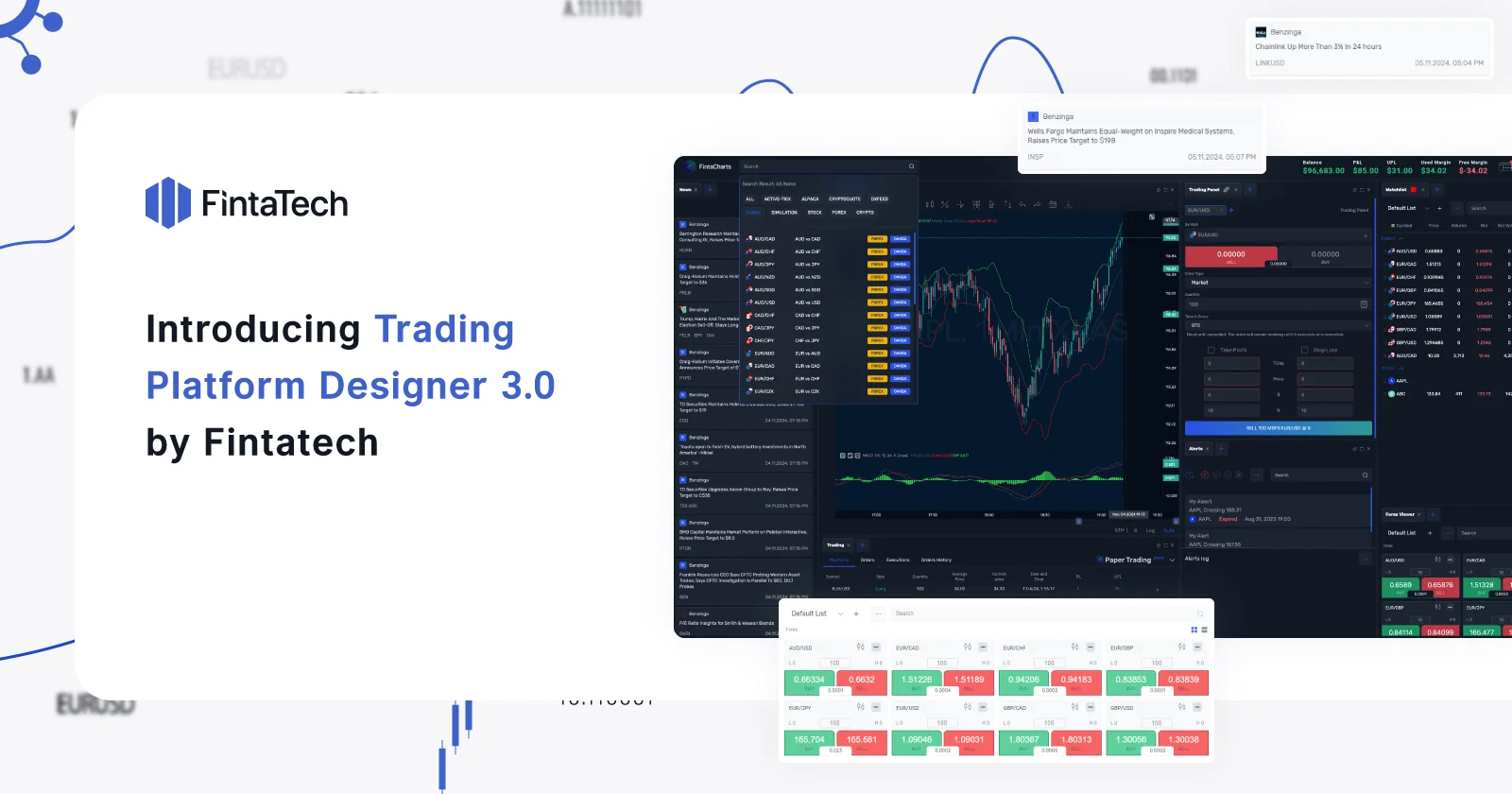
FintaTrader leverages both the streamlined efficiency of FintaWidget for quick modules and the immense analytical power of FintaChart for dedicated analysis screens. This combination provides a robust and scalable foundation for your business. It features a microservice architecture that easily handles peak market workloads, seamlessly integrates with diverse liquidity providers, and gives you total control over the user experience. Instead of attempting to piece together incompatible libraries, FintaTrader allows you to license a premium, reliable platform using proven software components.
Conclusion: Equip Your Platform for Success
Building a successful trading platform in today’s highly demanding market requires choosing software that is purposefully engineered for the assets your users trade. While generic charts may suffice for simple stock-tracking websites or basic financial blogs, they are fundamentally inadequate for the relentless and volatile world of Forex and cryptocurrency.
By understanding the technical limitations of legacy libraries and the psychological expectations of modern traders, you can make informed architectural decisions. Choosing a specialized SaaS suite like the Fintatech ecosystem ensures that your platform is not only highly functional but also fast, reliable, and powerful enough to give your users the professional edge they require.
Do not let subpar technology hold your business back. Explore how our trading platform software and advanced charts can transform your user experience today.

Twitter
Linkedin
Facebook